




Last Updated:
February 2nd, 2026
Local support – Fellowship meetings
Fellowship meetings are free, peer-led support groups for people recovering from addiction. They are run by people who have been through addiction themselves, and follow the 12-step programme first developed by Alcoholics Anonymous in the 1930s. Thousands of meetings take place across the UK every week, and there are no professional therapists, no fees, and no waiting lists. Whether you’re just starting recovery or have been sober for years, fellowship meetings offer a safe space and an incredible community of support.
A brief history of fellowship meetings
The first fellowship began in 1935 when two Americans, Bill Wilson and Dr Bob Smith, discovered talking to each other helped them stay sober. That conversation became Alcoholics Anonymous. The first UK alcoholic meetings took place in 1947, and the fellowship has grown steadily ever since.
As AA proved effective, people struggling with other addictions adapted the same 12-step model. Narcotics Anonymous started in 1953, reaching the UK in the 1980s. Cocaine Anonymous, Gamblers Anonymous, and Sex and Love Addicts Anonymous all followed, each addressing a specific substance or behavioural addiction while keeping the core structure intact.
How fellowship meetings help in recovery
Fellowship meetings work because addiction grows best when it can isolate you. This means that sharing recovery with a room full of people who have felt what you are feeling can be a powerful shield against addiction.
The 12-step programme used in many addiction recovery support groups provides structure when everything else feels chaotic. You work through the steps with a sponsor, which is someone further along in recovery who guides you and holds you accountable.
Fellowship meetings also give you somewhere to go when cravings hit. They are available on evenings and weekends, the times when relapse risk is often highest, and many people attend daily in early recovery, then continue weekly or as needed for years after. Fellowship meetings also complement professional treatment, like drug or alcohol rehab, but continue long after formal treatment ends.
Types of fellowship meetings
While all follow the same 12-step structure, different fellowships’ meetings exist for different addictions. Some people even attend multiple fellowships if they struggle with more than one substance or behaviour. Here are some of the most important meetings available in Britain:
AA meetings
AA is the original 12-step fellowship, created for alcohol addiction, with thousands of weekly meetings across the UK in towns and cities of all sizes.
NA meetings
NA covers drug addiction of any kind, including heroin addiction, cocaine addiction, cannabis addiction, and even prescription drug addiction. Most drug addiction support groups also welcome people struggling with alcoholism.
CA meetings
CA focuses on cocaine and crack cocaine addiction specifically, though anyone struggling with stimulants can usually attend.
CA meetings
SLAA meetings
SLAA addresses sex addiction and love addiction, covering compulsive sexual behaviour, pornography addiction, and destructive relationship patterns.
SLAA meetings
DA meetings
Debtors Anonymous helps people with compulsive buying and shopping addiction, which has become a major issue in Britain.
Gambling Anon
GA meetings support people with gambling addiction, with both in-person and online meetings across the UK.
Grey Sheets
Grey Sheets is for those struggling with eating disorders, which follow a similar path to addiction, both in how they develop and what recovery involves. Some UK rehab centres now offer treatment for both eating disorders and addiction, recognising how closely connected they are.
Grey Sheets
Meeting formats and accessibility
Most local support groups meet in community spaces, like church halls or community centres. Since the pandemic, online meetings have expanded significantly, making fellowship accessible if you live rurally, have mobility issues, or aren’t ready to attend in person.
Meetings are either “open” (anyone can attend, including supporters or those who are curious) or “closed” (only people who identify as having the addiction). Closed meetings allow for more honest sharing.
Formats vary. Speaker meetings feature one person telling their story. Discussion meetings focus on a topic or step. Step meetings work through the 12 steps systematically. Most areas have daily options, with multiple meetings on evenings and weekends, so you should be able to find the right one for you.
What to expect at your first meeting
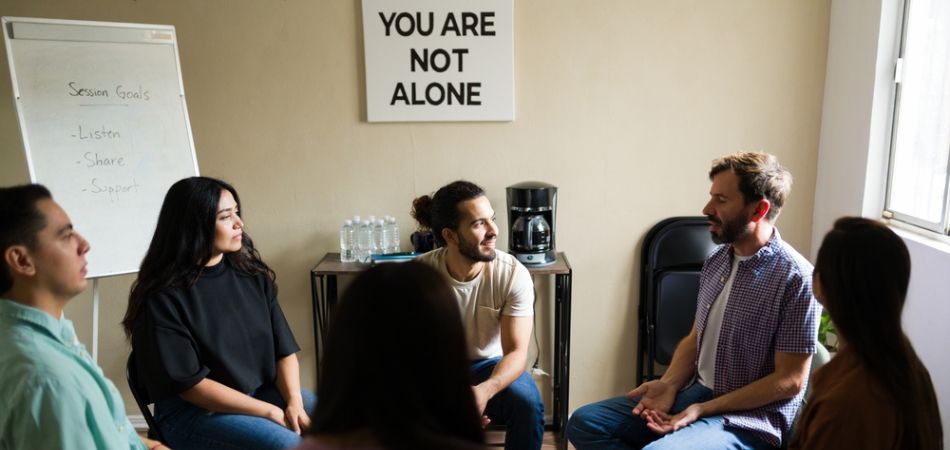
Walking into your first fellowship meeting takes courage, but knowing what to expect can make it a lot easier.
It is always a good idea to arrive a few minutes early if you can, because someone will usually greet newcomers and explain how things work. You can then choose a seat anywhere you like, as there is no assigned seating.
The meeting will usually open with a reading and some introductions. When it’s your turn, you can simply say your first name or even say nothing at all. No one will force you to speak, and many people attend several meetings before they say a word.
During the sharing portion, people speak one at a time about their experiences, and all you have to do is listen. There is no interrupting, no advice-giving, and no commenting on what someone else said. This creates a safe space where people can be totally honest without fear of judgement or having to justify or explain anything difficult.
Everything said in the room stays confidential. This is based on a foundational principle of all fellowships:
“Who you see here, what you hear here, when you leave here, let it stay here.”
After the meeting closes, people often hang around to chat. This is a good time to ask questions, exchange numbers, and get to know a few faces. You’re under no obligation to stay, but these informal conversations are a great way to make friends and build a support network.
Finding the right meeting for you
Not every fellowship meeting will feel right to you, and that’s completely normal. The atmosphere can vary from group to group, with some more formal and others relaxed. Some meetings attract younger people, others older. In general, finding a meeting where you feel comfortable matters more than geography. If you have specific needs, local support options may include:
- Gender-specific meetings
- LGBTQ+ inclusive meetings
- Young people’s meetings

The benefits of joining a fellowship group
Fellowship offers things that professional treatment often can’t. When alcohol or drug rehab ends, you may still receive weekly therapy sessions, but fellowship meetings are there whenever you need them, as often as you need them. For many people, fellowship becomes the foundation that holds everything else together. Some of the biggest benefits include:
- Free and available for life, with no funding cuts, and no discharge dates
- No referral needed, so you can walk into any meeting tonight
- Immediate community from your first meeting
- Available when professional services aren’t, on evenings, weekends, and holidays
- Ongoing structure after rehab or detox
- Reduced relapse risk through accountability and peer support
- The chance to make new friends and social connections
How to find local meetings
Each fellowship maintains its own meeting directory online, and most directories provide days and times for both in-person and online meetings:
- AA – alcoholics-anonymous.org.uk/find-a-meeting
- NA – https://meetings.ukna.org/
- CA – cocaineanonymous.org.uk
- SLAA – slaauk.org/meeting-list
- DA – debtorsanonymous.org.uk/meetings-list
- Gamblers Anonymous – gamblersanonymous.org.uk/meeting
- Grey Sheets – https://greysheet.org/meetings
Some also list contact numbers so you can speak to someone before turning up. If you’re still unsure where to start, Recovery.org.uk can help you find local meetings and connect you with the best treatment options. Reach out through our contact us page for guidance on all the local support and treatment services available to you.