


Last Updated:
January 30th, 2026
Psilocybin addiction: signs, symptoms and side-effects
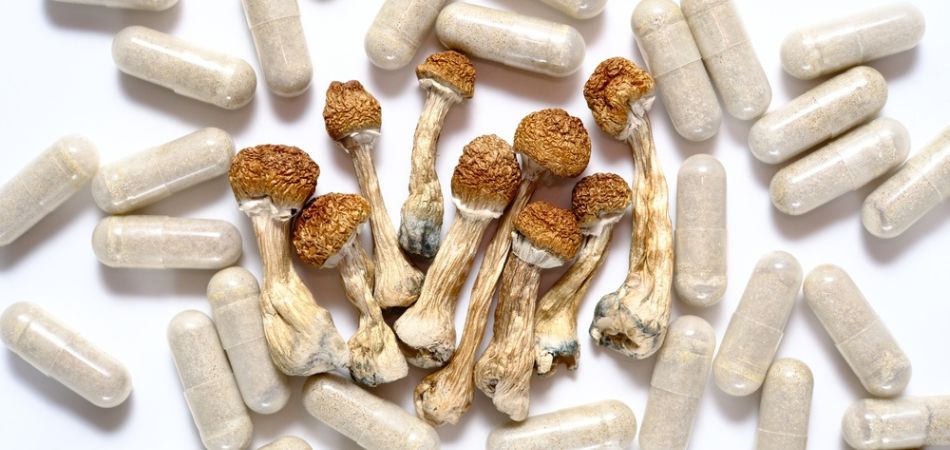
Psilocybin, the active drug in magic mushrooms, is also sold as concentrated capsules, pills, and extracts. UK surveys report 1.1% of adults used psilocybin or magic mushrooms in 2023-2024, with rates twice as high among 16-24 year olds. However, those figures miss regular users, daily microdosers, and people who have developed serious problems. Psilocybin doesn’t cause physical dependence, but psychological addiction is real and can be just as destructive. If your psilocybin use has moved beyond occasional experimentation, recognising what psilocybin addiction looks like is the first step toward recovery.
Defining psilocybin addiction
When you can no longer control your psilocybin use despite mounting harms, that is the definition of addiction. Whether you’re microdosing all the time with capsules, taking extracts for trips, or eating edibles bought online, psychological dependence can develop even without physical cravings.
UK treatment services report growing numbers seeking help for problems with psychedelics like psilocybin, despite widespread belief that these substances carry no real risk. But a mental and emotional addiction is just as serious as physical dependence, with equally devastating consequences.
The stages of psilocybin addiction
Psilocybin addiction doesn’t happen after your first dose. It builds over time through stages that look different for everyone, though the warning signs tend to follow a recognisable progression:
How to spot psilocybin addiction signs
Recognising psilocybin addiction signs is difficult because there’s no physical withdrawal like with opioids or benzodiazepines. The psychological hold develops quietly, making addiction denial easier. Watch for these warning signs:
- Your doses have got bigger, or you’re using several times a week when you started out using monthly or less.
- Between doses, you feel empty, numb, or like everything has lost its colour and meaning.
- You don’t want to see people who worry about you, and only spend time with other psilocybin users.
- You’re spending more money than you can afford on psilocybin, often using funds meant for bills or essentials.
- You have had frightening experiences or noticed your mental health getting worse, but you keep using anyway.
- The problems are becoming harder to ignore or deny, but you still can’t bring yourself to stop.
Why is psilocybin addictive?
Psilocybin acts on serotonin receptors in your brain, creating intense altered states that feel profound and deeply meaningful. When these experiences end, normal life can feel empty by comparison, so you use more.
But these effects don’t explain why some people get trapped by addiction while others don’t. This is often due to personal factors that matter just as much as the chemical effects:
Psilocybin side effects and addiction dangers
Many people assume that just because psilocybin comes from natural sources, it must be safe. However, the dangers are real and can be life-affecting:
Finding help for psilocybin addiction
Recognising you need to get help is the hardest part, but it’s also where change becomes possible.
Inpatient medical detox provides a supervised environment where your system can reset after prolonged psilocybin exposure. This is especially important if you’ve been combining psilocybin with other substances or if psychological symptoms persist after stopping.
Drug rehab treatment then addresses the unresolved trauma, mental health struggles, or emotional pain driving your use. Evidence-based therapy helps you process these underlying issues properly, so you don’t need psilocybin to mask them.
After rehab, psilocybin relapse prevention strategies help you identify triggers and develop better responses before situations escalate. Local support networks and recovery groups like 12-step and NA meetings connect you with people who understand the challenges of leaving drug addiction behind.
Recovery.org helps people across Britain find rehab centres and programmes that fit their situation. Contact us today for expert guidance on the best route forward.
Frequently Asked Questions
(Click here to see works cited)
- Office for National Statistics. “Drug Misuse in England and Wales: Year Ending March 2024.” GOV.UK, 2024, https://www.gov.uk/government/statistics/drug-misuse-in-england-and-wales-year-ending-march-2024
- Johnson, Matthew W., et al. “Classic Psychedelics: An Integrative Review of Epidemiology, Therapeutics, Mystical Experience, and Brain Network Function.” Pharmacology & Therapeutics, vol. 197, 2019, pp. 83-102,
https://doi.org/10.1016/j.pharmthera.2018.11.010 - UK Government. “Misuse of Drugs Act 1971.” Legislation.gov.uk, 1971, https://www.legislation.gov.uk/ukpga/1971/38/contents
- Martinotti, Giovanni, et al. “Hallucinogen Persisting Perception Disorder: Etiology, Clinical Features, and Therapeutic Perspectives.” Brain Sciences, vol. 8, no. 3, 2018, https://doi.org/10.3390/brainsci8030047
- Talk to Frank. “Magic Mushrooms.” Talk to Frank, 2024, https://www.talktofrank.com/drug/magic-mushrooms