


Last Updated:
January 30th, 2026
Xanax addiction: Signs, symptoms and side effects
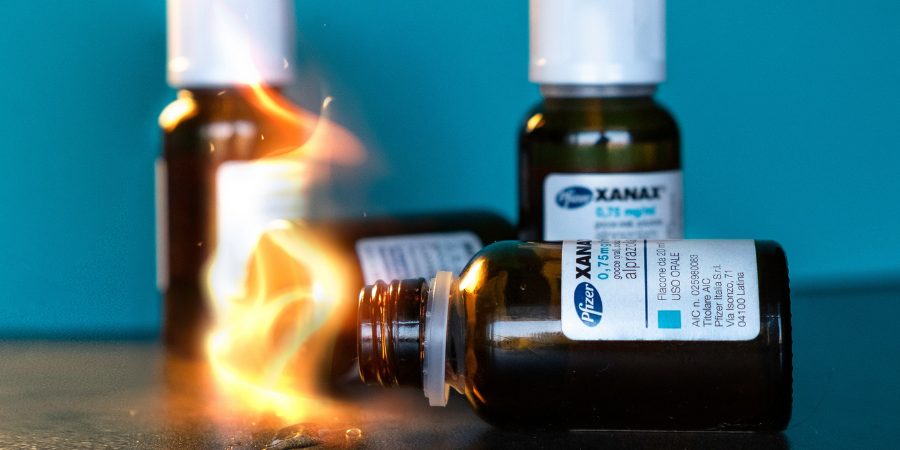
Xanax is the brand name for alprazolam, a fast-acting benzodiazepine prescribed for panic attacks and severe anxiety disorders. It is about ten times stronger than most other benzos, which makes it particularly effective but also highly addictive. Though not available on the NHS, Xanax can be obtained privately or illegally, which is risky as pills may be fake or contaminated. If you are using Xanax, no matter where it’s from, you need to know the dangers and where to get help if you are worried about Xanax addiction.
What is Xanax addiction?
Xanax addiction is when you can’t stop taking alprazolam even though it’s wrecking your life. It can begin with a prescription for panic attacks, illegal self-medication or recreational Xanax abuse.
When you first start taking it, Xanax stops panic attacks within half an hour, and calms even extreme anxiety incredibly fast. The problem is that Xanax enters and leaves your body very quickly, so anxiety or panic symptoms return sooner than with other benzos. Ideally, a doctor will then look at alternative ways to manage symptoms or address underlying issues, but if this doesn’t happen, you can end up taking Xanax more often than you meant to or in bigger doses.
After a few weeks of regular use, Xanax dependence develops. Your body now expects the drug, and you don’t take it on time, anxiety comes back much worse than before, along with shaking, a rapid heartbeat, and terrible panic. Taking more Xanax makes it all go away instantly, so it becomes a cycle of withdrawal and relapse.
If this continues, your Xanax abuse escalates, and you start taking it for work stress, social anxiety, sleep problems, or general worry. When Xanax controls everything you do, even though it is destroying your relationships, job, or health, that is the definition of alprazolam addiction.
How can I spot Xanax addiction signs?
Because Xanax is a genuine prescription drug (even if you bought it illegally), it is easy to be in addiction denial and pretend there is no problem. If you are concerned about your own alprazolam use or considering an intervention for someone you know, spotting these Xanax addiction signs early could save a life:
- Taking Xanax several times a day instead of just when panic hits
- Running out of your prescription early and asking different doctors for more
- Buying Xanax from drug dealers or online when you can’t get prescriptions
- Mixing Xanax with other drugs or alcohol to make it stronger when it stops working as well
- Deceiving your family, friends, or doctor about how much Xanax you’re really taking
- Waking up with no memory of whole evenings
- Trying to stop before, but Xanax withdrawal was so bad, you started again straight away
- Keeping going even after your doctor warns you, your relationships fall apart, or you have problems at work
Why is Xanax addictive?
Alprazolam works on GABA receptors in your brain, which releases huge amounts of GABA into your brain. This is a powerful calming chemical, which is why one Xanax tablet can initially stop a panic attack so fast. But if you take Xanax regularly, your brain starts making less and less of its own GABA, so if you don’t take Xanax, your anxiety spins out of control, and you are slammed with awful withdrawal symptoms.
That’s the chemical bit, but there is a whole mix of other underlying causes that reinforce alprazolam addiction:

Xanax side effects and addiction dangers
Alprazolam addiction brings immediate and long-term dangers, but the longer you use Xanax, the worse these dangers become:
Finding help for Xanax addiction
Coming off Xanax needs medical supervision because stopping suddenly can kill you. The suggested detox method is a slow, daily dosage reduction or a switch to a longer-acting benzo like diazepam first. The whole time, you need a drug detox team to watch for seizures and severe psychological symptoms.
Benzodiazepine rehab then works out why you needed Xanax so badly. This will involve a whole range of different therapies, lifestyle changes, and relapse prevention planning.
Staying in touch with support after treatment helps stop relapse. NA meetings, SMART Recovery groups, and other local support networks operate throughout Britain. Your drug rehab programme may also include aftercare therapy and alumni services.
If you need advice on Xanax addiction, contact us today, and we can explain all the avenues available to you.
Frequently Asked Questions
(Click here to see works cited)
- Office for National Statistics. “Deaths related to drug poisoning in England and Wales: 2023 registrations.” ONS, 23 Oct. 2024,
https://www.ons.gov.uk/peoplepopulationandcommunity/birthsdeathsandmarriages/deaths/bulletins/deathsrelatedtodrugpoisoninginenglandandwales/2023registrations. - AlphaBiolabs. “Xanax linked to more than 200 deaths.” AlphaBiolabs UK, 3 Apr. 2024, https://www.alphabiolabs.co.uk/blog/xanax-linked-to-more-than-200-deaths/.
- Big Issue. “Number of deaths from nitazenes increases fourfold in two years.” Big Issue, https://www.bigissue.com/life/health/nitazenes-drugs-deaths-2024-statistics/.
- UK Health Security Agency. “Alprazolam (Xanax): What are the facts?” UKHSA Blog, 30 Jul. 2018,
https://ukhsa.blog.gov.uk/2018/07/30/alprazolam-xanax-what-are-the-facts/. - Ait-Daoud, Nassima, et al. “A Review of Alprazolam Use, Misuse, and Withdrawal.” Journal of Addiction Medicine, vol. 12, no. 1, 2018,
https://pmc.ncbi.nlm.nih.gov/articles/PMC5846112/. - “Alprazolam.” StatPearls, NCBI Bookshelf,
https://www.ncbi.nlm.nih.gov/books/NBK538165/. - Medical News Today. “What does Xanax feel like?” Medical News Today, 27 Jan. 2025, https://www.medicalnewstoday.com/articles/326528.