


Last Updated:
January 30th, 2026
Sleeping pill addiction
When zopiclone and zolpidem arrived in the 1980s and 1990s, they were marketed as safer alternatives to benzodiazepines. These new sleeping pills were designed to be less addictive, have fewer side effects, and provide an effective solution to insomnia. However, many millions of people in Britain are currently taking these medications, with some developing a real and dangerous sleeping pill addiction.

What is sleeping pill addiction?
Sleeping pill addiction means you cannot stop taking sedative medication even when it is harming you. Most people begin taking sleeping pills because they really do need them to sleep. However, “safe” use can become sleeping pill abuse without you realising that a problem is growing. Sleeping pill abuse can mean taking extra tablets when sleep won’t come, using pills left over from an old prescription, snorting pills so they work quicker, or taking them during the day to calm your nerves.
Sleeping pill dependence then sets in with regular use, so when you miss a dose, and your body lets you know by going into withdrawal. This usually means insomnia returning far more intensely than before, with sweating, shaking, and intense anxiety following.
Sleeping pill addiction is where that dependence meets compulsion. If you’re reading this, the chances are you’ve already unsuccessfully attempted to use less or quit entirely. Addiction denial often takes hold here, with many people convinced they genuinely need the medication when the sleeping pills themselves are now the problem.
Understanding sleeping pill addiction statistics
In 2010, doctors issued 9.8 million hypnotic prescriptions in England. By 2023, this had dropped to 5.8 million. However, millions of people remain on these drugs long-term, often for years, despite official guidelines recommending a maximum of a few weeks.
Part of the problem is that the claim that Z-drugs are less addictive than older sleeping pills hasn’t held up. This has led to some tragic outcomes. Deaths involving zopiclone and zolpidem reached 222 in England and Wales in 2024, the highest on record. Eight out of ten of these deaths also involved another substance, usually opioids, alcohol, or benzodiazepines.
What are the most addictive sleeping pills?
Z-drugs are the new generation of sleeping pills that are most commonly linked to addiction in Britain:
Zopiclone addiction
Zopiclone accounts for most sleeping pill problems in Britain, as there are 4.5 million zopiclone prescriptions issued annually. It was reclassified as a Schedule 4 controlled substance in 2014 after years of mounting evidence about misuse.
Zopiclone addiction
Zolpidem addiction
Zolpidem is a fast-acting pill that puts you to sleep quickly but wears off within a few hours. Around 580,000 prescriptions go out each year in Britain, so the addiction potential is very high.
Zolpidem addiction
Zaleplon addiction
Zaleplon is the shortest-acting Z-drug, which means it requires more regular redosing. It is no longer available legally in the UK, but may still be found online.
Zaleplon addiction
What are the signs of sleeping pill addiction?
Sleeping pill addiction symptoms tend to build slowly and may not be obvious for a long time. However, here are some warning signs of sleeping pill addiction to look out for:
- Constantly checking how many nights you have left before needing a refill
- Feeling nervous when sleeping pill supplies start running low
- Getting defensive or dismissive when someone questions your use
- Telling yourself and others you genuinely need the pills, even though the original sleep problem is long gone
- Daytime grogginess that won’t clear
- Fuzzy thinking, poor balance, memory gaps, and slurred speech
- Needing higher doses of sleeping pills to get the original sedative effects
- Strange and dangerous sleep behaviours, like sleepwalking, cooking and eating in the night, and even driving while not fully conscious
- Sleeping pill withdrawal symptoms when you go without a dose
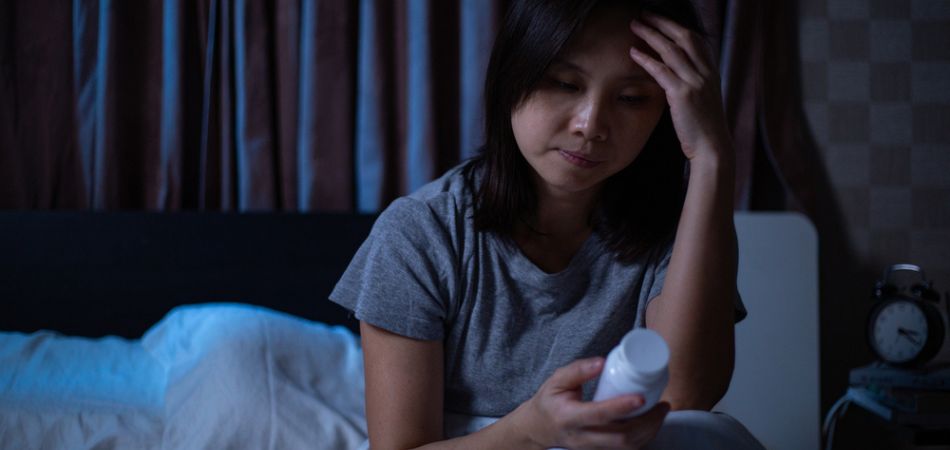
What causes sleeping pill addiction?
Sleeping pills boost GABA, a chemical that dampens activity in your brain. The resulting calm feels good at first, but your brain fights back by dialling down its own relaxation mechanisms. Before long, you need the pills just to reach a state that used to come naturally. Skip a dose and your brain, now wired for stimulation, goes into overdrive, causing rebound insomnia and anxiety that send you straight back to the pills.
While these chemical brain effects mean anyone who takes sleeping pills long enough can develop a problem, there is a higher risk for:
- Those dealing with mental health problems, which then causes a dual diagnosis, like anxiety and addiction, or depression and addiction.
- Anyone with a personal or family history of alcohol or drug addiction
- Those on higher doses or longer prescriptions
- Women (only because they receive more sleeping pill prescriptions than men)
- Older people, who may not clear sleeping pills from their bodies as quickly
What are the dangers and side effects of sleeping pill addiction?
The harm from sleeping pill misuse gets worse the longer you use them, and the more you take. Some of the biggest risks include:
- Sleeping pill overdose risk, particularly when combined with alcohol, opioids, or benzodiazepines
- Dangerously slowed breathing
- Blackouts and sleep behaviours that you don’t remember
- Falls and accidents because of impaired coordination or drowsiness
- Confusion and disorientation
- Possible increased risk of dementia with prolonged sleeping pill misuse
- Lasting damage to memory and cognitive function
- Higher mortality risk, particularly in older users
- Chronic fatigue, even when technically sleeping enough
- Suicidal thoughts, particularly during withdrawal
- Worsening depression over time
- Increased anxiety, often worse than before you started taking pills
- Complete emotional numbness
What is the treatment process for sleeping pill addiction?
Treatment for sleeping pill addiction is a multi-stage process, and is usually most successful when you start early:
Sleeping pill detox
Sleeping pill drug detox requires medical supervision because quitting cold turkey carries real risks like seizures. Doctors typically reduce your dose in small steps over several weeks, and may give you other medicines for easier withdrawal.
Sleeping pill rehab
Sleeping pill drug rehab tackles why you became dependent in the first place, with therapy, lifestyle changes, relapse prevention, and new holistic coping strategies all playing an important part. A 10-day package may suit milder cases, while a 28-day package or 90-day package gives more time for deeper therapeutic work.
Post-rehab support
It can take months for your brain to relearn how to fall asleep on its own, so ongoing support really is crucial. Your rehab programme should include some form of aftercare, and you can also join NA meetings to get local support with prescription drug addiction recovery.
Finding help for sleeping pill addiction
Quitting sleeping pills without medical supervision can be risky, and even people who don’t develop dangerous withdrawal symptoms often fail on their own. If you’ve tried to stop and couldn’t, that’s because sleeping pills are incredibly strong, not because you’re not strong enough.Recovery.org can help you understand what treatment involves and find the right programme. Get in touch today through our contact us page.
Frequently Asked Questions
(Click here to see works cited)
- Heald, Adrian H., et al. “National Prescribing Trends and Cost Analysis of Antidepressants, Anxiolytics, and Hypnotics in England, 2010–2023.” Brain and Behavior, vol. 15, no. 7, 2025, doi.org/10.1002/brb3.70456.
- MIMS. “Tramadol Reclassified as a Controlled Drug.” MIMS, 10 June 2014, www.mims.co.uk/tramadol-reclassified-controlled-drug/surgery/article/1297952.
- Office for National Statistics. “Deaths Related to Drug Poisoning in England and Wales: 2024 Registrations.” ONS, 17 Oct. 2025, www.ons.gov.uk/peoplepopulationandcommunity/birthsdeathsandmarriages/deaths/bulletins/deathsrelatedtodrugpoisoninginenglandandwales/2024registrations.
- Public Health England. “Dependence and Withdrawal Associated with Some Prescribed Medicines: An Evidence Review.” GOV.UK, 10 Sept. 2019, www.gov.uk/government/publications/prescribed-medicines-review-report.