


Last Updated:
January 30th, 2026
DA Meetings
Debtors Anonymous is a local support group for people who have a healthy relationship with money, often because of compulsive buying. If you can’t stop borrowing or spending, or you keep making financial decisions you swore you wouldn’t make again, DA may help. The fellowship applies the same 12-step approach used in AA meetings and NA meetings to support members at every stage of recovery.

Who is Debtors Anonymous for?
DA is open to anyone whose borrowing or spending feels out of control. That includes credit card debt, overdrafts, personal loans, buy-now-pay-later schemes, and borrowing from family. It also includes people who earn enough but spend compulsively, often hiding purchases, lying about what things cost, feeling unable to leave a shop without buying something, or using shopping to manage stress, boredom, or depression.
Many members of DA are at different stages of recovery from shopping addiction. Debt and addiction to shopping often feed each other, with the spending creating the debt, and the shame around debt triggers more spending. If you feel high when you buy something, followed by guilt or fear of your credit card statement arriving, Debtors Anonymous understands that cycle. DA doesn’t require a specific debt amount or a diagnosis of shopping addiction. If you want to stop the behaviour, you qualify.
How does Debtors Anonymous work?
DA started in New York in 1968 when members of AA realised their money problems followed the same patterns as their drinking. By 1971, they had adapted the 12-step model to focus specifically on not incurring new unsecured debt. The fellowship now runs across Britain, with both in-person and remote meetings.
Everyone leading a DA meeting has dealt with compulsive debt or spending themselves. The programme rests on several foundations which are similar to those of other local support fellowships:
The 12 traditions exist to protect the DA fellowship. They mean that no single member runs things, that meetings stay out of politics, and that the DA keeps its distance from banks, lenders, and debt charities. Crucially, the traditions also state that what you say stays in the room.
What DA meeting formats are available?
DA holds meetings in person, by phone, and online. Most groups stick to the same weekly slot, which helps recovery become part of your routine. DA meeting options include:
-
In-person DA meetings
DA groups usually meet in rented rooms or places of worship, like a church hall. Group numbers tend to be relatively small, so there is space for everyone to contribute if they want.
-
Online and phone meetings
DA has offered telephone meetings for decades, and video options grew after COVID. Remote attendance works if there’s no group near you, or you don’t have time to attend in person.
Whichever you choose, regular meetings are usually more effective than sporadic attendance because compulsive debt and buying take time and ongoing commitment to resolve.
What happens in a DA meeting?
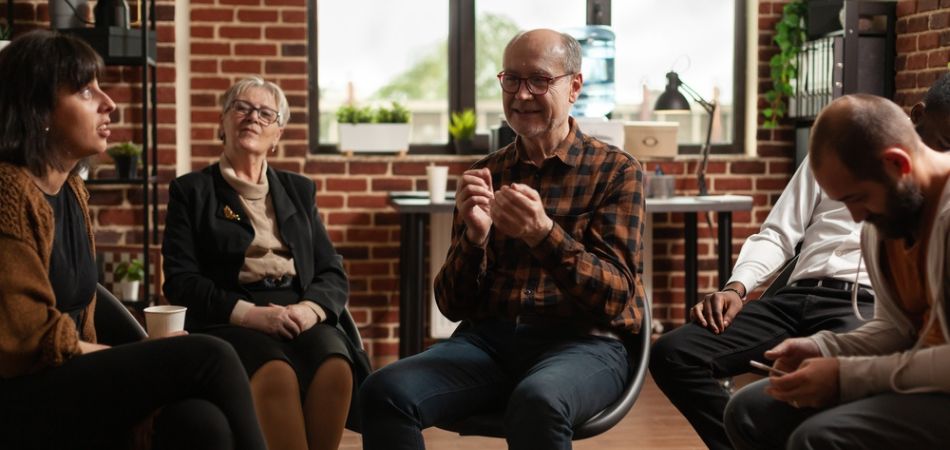
The group gathers, and someone reads a short explanation of what DA is about. Then, people introduce themselves using first names only. When it gets to you, you can say your name, say you’d rather listen, or stay silent.
The main part of the meeting is sharing, as members talk about their experiences with money, debt, spending, shame, secrecy, and whatever else is on their mind or fits the topic of the day. Nobody interrupts or tells you what you should have done, so you have time to really talk.
Some DA groups also run “Pressure Relief Groups”, which are smaller sessions where two or three members sit down with you to go through your actual finances and work out a spending plan. These happen outside regular DA meetings and usually after you’ve been attending for a while. For people with compulsive buying patterns, this can be the first time they’ve ever looked at the numbers honestly.
Conversations often continue informally once the meeting wraps up, and that is a natural time to swap contact details or ask someone about sponsorship.
What are the benefits of attending DA meetings?
Debt advice services help with practical steps like negotiating with creditors, but they don’t touch the compulsion underneath. DA deals with the pattern itself, and for people with a behavioural addiction around money, that’s often the missing piece.
Professional treatment for shopping addiction through behavioural rehab can help, but programmes have end dates. DA doesn’t, with other crucial benefits including:
- No charge, no matter how long you attend DA meetings
- No paperwork or waiting period to get started
- DA meetings at times when debt helplines and banks are shut
- People who understand the shame without needing it explained
- Practical tools for tracking where your money actually goes
- A sponsor who can talk you through the 12 steps and help you cope with urges
If your spending is linked to gambling addiction, you may want to look at attending DA meetings and Gambling Anon alongside each other.
What Debtors Anonymous is not
DA is not a debt management service. It won’t consolidate loans, negotiate with creditors, or give you financial advice. Members share experience, but nobody tells you what to do with your money.
DA is also not a shopping rehab clinic. There are no therapists running sessions and no clinical assessments. What DA offers instead is a room full of people who know exactly what it feels like to buy something you don’t need with money you don’t have and then hide it from everyone who matters.
DA is also not religious, and though the 12 steps reference a “higher power,” many members treat this as the DA group, or something else to drive their recovery. DA is not quick, as compulsive spending and debt took years to develop and won’t disappear after a few meetings. That is why the programme works best if you keep showing up.
How to find a DA meeting near you
DA UK lists meetings at debtorsanonymous.org.uk/meetings-list with filters for region and format. If you’re unsure whether DA is right for you, the site has contact details so you can speak to someone for advice.
Recovery.org.uk can help you find DA meetings or explore treatment for compulsive buying and shopping addiction. To talk through your options, use our contact us page.